
When you choose between a COB and an SMD LED screen, do you know the differences between them? Both are LED packaging technologies, but they differ significantly in display performance, durability, pixels, and cost. Which one is more suitable for your business plan? This article will tell you the answer.
What Is a COB LED Screen?

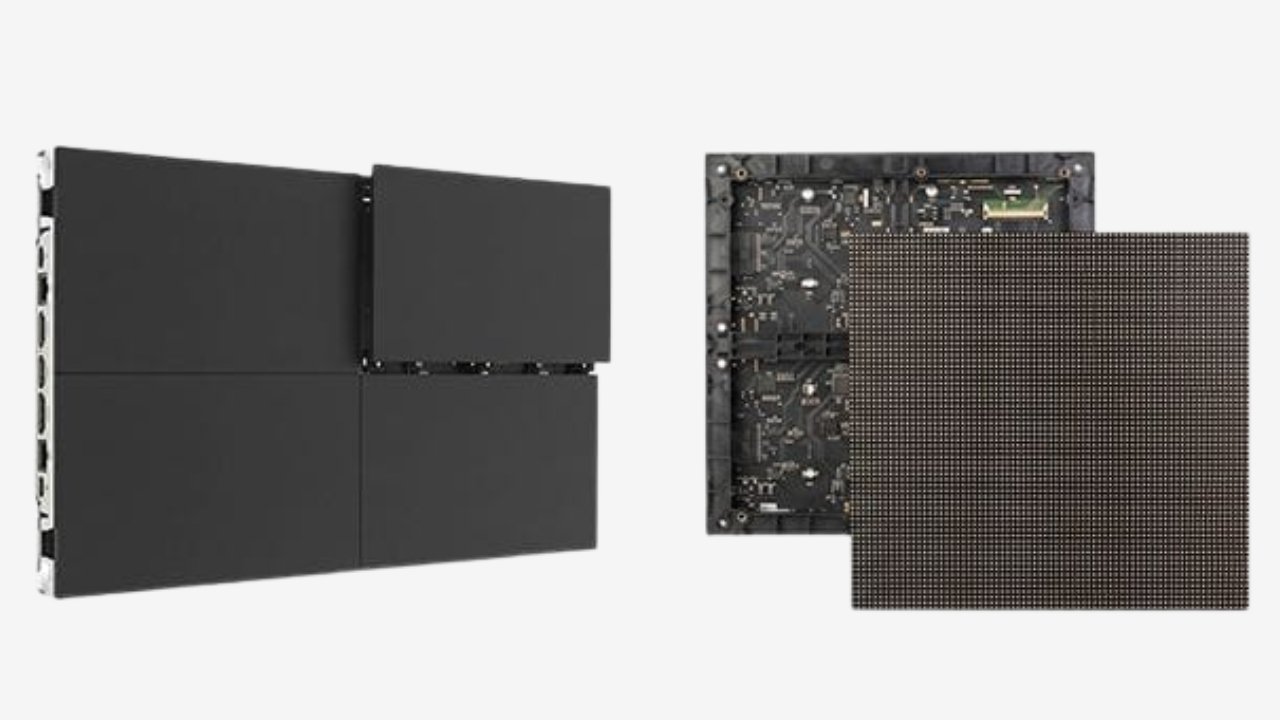
COB LED screen is a Chip on Board LED screen. The principle is to directly attach the RGB light-emitting chips to the PCB circuit board, then cover the surface with a protective layer. The surface is smooth and integrated, with no exposed LED packages.
What Is an SMD LED Screen?

SMD LED screen refers to a Surface Mount Device LED display, which is the most common type of ordinary LED display on the market. It involves attaching the independently packaged LED chips using the surface mount technology onto the PCB board. The LED chips of SMD LEDs protrude and have a distinct granular appearance.
Key Difference Between SMD And COB LED

Durability and Reliability
The LED chips of SMD LEDs are directly exposed on the surface of the PCB board. When the screen is in continuous operation, external impacts, dust, and humid air may all affect the stability. As the usage time increases, you may encounter problems such as an increase in defective points, lamp beads falling off, and increased maintenance frequency, which will lead to higher maintenance costs in the later stage.
COB LEDs provide enhanced protection for your display by encapsulating the entire LED chip with a protective layer of high-strength resin. Even in control rooms, conference centers, or high-end commercial displays, COB technology can reduce the risk of physical damage, moisture intrusion, and dead pixels.
Pixel Pitch
When choosing an LED screen, the pixel pitch directly affects the viewing experience, the applications, and your overall investment value.
Due to the limitations imposed by the component size, current mainstream SMD screens are typically at P1.25 or larger, making them more suitable for commercial applications over long distances. Even when the audience maintains a certain distance from the screen, SMD can still provide a stable and cost-effective display.
However, the COB LED will have a greater advantage when viewed at a close distance. The COB technology can achieve ultra-small pixel pitches such as P0.9, P0.6, and even P0.4. When the audience is close to the screen, they can still see the details and a clear picture. For commercial meeting rooms, control centers, or high-end exhibition displays, COB is more likely to meet your demands for high resolution and fine picture quality.
Image Quality
If your project has high requirements for picture quality, COB LED usually has more advantages. It also performs more stably in terms of contrast and brightness uniformity.
Due to the independent packaging of the light beads, the black consistency and picture uniformity of SMD are usually not as good as those of COB in applications with extremely small pitch. However, for projects that need a longer viewing distance or a lower budget, SMD remains a cost-effective solution.
Heat Dissipation and Energy Efficiency
The SMD LED relies on solder joints and the PCB board for heat conduction. Since heat has to travel a considerable distance before it can be dissipated, there is a higher risk of localised heat build-up when the screen is operating under heavy load for extended periods.
By comparison, COB LEDs offer better heat dissipation. The LED chips are bonded directly to the PCB using conductive adhesive. This allows heat to be conducted more directly and rapidly to the substrate, where it is dissipated. This structure not only improves overall heat dissipation efficiency but also helps to reduce the chip’s operating temperature over the long term. This can extend the product’s service life and enhance its stability.
Upfront Cost
In terms of upfront cost, there is a significant difference between SMD LED and COB LED. This is also the key factor you should consider when making a selection.
The SMD is already highly mature with a highly automated production process and a complete supply chain system. Its manufacturing cost is relatively low, so it usually has stronger price competitiveness in the initial procurement stage.
From a long-term operational perspective, COB LED also has certain advantages in energy efficiency. Due to its more compact design and higher luminous efficiency, it typically consumes less power whilst achieving the same or even higher brightness levels. If your business focuses more on long-term ROI than the initial budget, COB is often a more worthwhile option.
Maintenance and Repair
Due to the extremely high flexibility of SMD LEDs, they have been widely used in large-scale commercial projects. In case of a single-point failure, technicians can directly carry out replacement or repair on-site without complex equipment support. This effectively controls the downtime and maintenance costs.
The COB LED chips are completely encapsulated within a protective layer. Although this significantly enhances the protection performance, it also increases the maintenance difficulty. Generally speaking, the repair of COB displays requires more specialized equipment or factory-level processing, which means that its cost is higher than the traditional SMD solution.
Core Applications Analysis of SMD And COB LED

SMD LED displays are ideal for cost-sensitive, general-purpose applications. COB LED displays are better suited to high-end applications and environments requiring small pixel pitches.
SMD LED Screen
Commercial Advertising
SMD LED has high brightness and excellent visibility, making advertisements more attractive. It has low power consumption during long-term use, saving energy and reducing operating costs.
It is commonly used in high-traffic commercial applications such as shopping malls, airports, and subway stations.
Conference and Exhibition
SMD LED performs stably in exhibitions and press conferences. The picture is clear and detailed, suitable for meeting PPTs and data content.
At the same time, it is lightweight and supports quick disassembly and assembly, making it convenient for transportation and reuse. It is highly suitable for short-term exhibitions and temporary events.
Stadiums
For large stadium LED screens, SMD LEDs have high brightness and can ensure clear visibility even in strong light or outdoor conditions. At the same time, its advanced heat dissipation ensures stable operation, meeting the high-load, continuous operation requirements during sports events.
Outdoor Advertising
The structure of SMD LEDs can withstand various outdoor conditions, such as rain, temperature, and sandstorms. It has strong overall stability and is suitable for long-term outdoor advertising. In applications where the system operates 24/7, it can provide reliable advertising display effects.
COB LED Screen
Commercial Display
The COB LED screen presents a smooth and seamless display with no visible particles. Even when viewed closely, there are no obvious visual noise points. The picture is softer and more comfortable, effectively enhancing your brand image.
Education Field
The COB screen can emit soft light, which is beneficial for protecting students’ eyesight. It can operate continuously for a long time while maintaining a stable picture.
Traffic and Security Monitoring
The COB screens have a high level of protection and stable heat dissipation performance, making them suitable for harsh environments. They can run reliably 24 hours a day, meeting the demands for high reliability. It is suitable for all-day displays in applications such as traffic and security surveillance.
FAQ
Which is Better for Outdoor LED Displays: SMD or COB?
When it comes to outdoor LED displays, SMD technology is superior. It offers higher brightness and functions reliably when exposed to sunlight, rain, and dust. Furthermore, SMD technology is more cost-effective and easier to maintain. COB technology is not usually used in outdoor applications as it is more expensive and difficult to repair.
Which Technology Offers Better Black Levels and Contrast?
The COB technology can achieve deeper black levels and higher contrast ratios. Its surface is smoother, with no visible gaps between pixels, making the picture appear more profound and clear. The SMD technology still performs well, but when viewed closely, it may have more graininess, and the black uniformity is slightly inferior.
Which Technology Is Better for Control Room Applications?
COB is better suited to control rooms. Control rooms require equipment to operate for long periods, close-up viewing, and extremely clear images. The COB display has no pixel graininess, is more stable, and has a lower failure rate. For operators who need to stare at the screen for a long time, it can also provide a more comfortable viewing experience. Although the SMD is cheaper, in terms of all-day monitoring, the COB is more reliable.
What Are the Disadvantages of SMD and COB LED?
SMD is more prone to damage because the LED chip is exposed, and the pixel granularity is more noticeable at a small pitch. COB has a higher cost and is more difficult to repair as the chip is sealed inside. Moreover, it requires factory-level maintenance services. Therefore, although SMD is cheaper, it offers poorer protection; while COB is more durable but has a higher price and greater maintenance difficulty.
How Long Do COB LEDs Typically Last?
Under normal usage conditions, the lifespan of a COB LED is typically around 80,000 to 100,000 hours. Good heat dissipation and a stable power supply can further extend its lifespan. This product is specially designed for long-term use and is suitable for scenarios such as control rooms, meeting rooms, and high-end indoor displays that operate for several hours every day.
What Is the Lifespan of SMD LEDs?
The lifespan of an SMD LED is typically around 70,000 to 100,000 hours. The exact duration depends on the brightness level, heat dissipation control, and usage time. When used in outdoor or high-brightness environments, its lifespan may be shortened. Nevertheless, it is still widely used because of its stable performance, ease of maintenance, and high cost-effectiveness for large-scale LED advertising screens.
Final Thoughts

COB and SMD LED screens play significant roles in commercial applications. If you want to learn more about our LED displays, please Contact us to discuss your project requirements and get a tailored LED display solution.

