

Certified for Global Stage LED Projects


JingyLED LED Screen Stage Design Solutions
Our innovative LED display systems bring energy to concerts, festivals, corporate events, and theatrical performances. Whether you need flat, curved, or modular LED screen layouts, we offer fully customised solutions to meet your creative vision and venue requirements.
With high refresh rates, vibrant colour reproduction, and ultra-thin panels, JingyLED screens ensure seamless video playback and an immersive visual experience. From indoor to outdoor stages, we offer lightweight, easy-to-install, and fully scalable LED screens suitable for events of any size.
Benefits of Choosing Stage LED Screen From JingyLED
JingyLED’s stage LED screen products are packaged using COB technology, with pure colors, soft and non glaring, and good presentation effects.
To accommodate the frequent setup and dismantling of stage events, our stage backdrop LED screen adopts a modular design that is easy to install and can be quickly disassembled.
The stage LED screen background is rated IP65, offering excellent heat dissipation and energy efficiency for extended operation, making it suitable for long-term operation.
JingyLED optimizes its production process and offers a variety of product specifications for customers to choose from within their budget. If you have more detailed requirements, we can provide you with customized LED screen for stage solutions.
Contact us and get a quote for your ideal stage background.

A flexible LED screen that can be curved to create an immersive stage design, enhancing the depth and visual impact of events.

A big LED screen for stage that is ideal for use as a stage backdrop, providing vivid visual effects and dynamic content for live events and performances.

This cost-effective LED screen combines professional-grade performance with an affordable price, ideal for medium to small-scale events.

Usually, 500 × 500 mm or 500 × 1000 mm enclosures are used, emphasizing “quick assembly and disassembly” and “lightweight enclosures” for short-term touring activities.

A high-brightness LED screen designed specifically for concerts, ensuring that visual effects, animations, and special effects are clearly visible from all audience angles.

Suitable for indoor performance venues such as conference rooms, theaters, weddings, exhibitions, etc. P1.2-P4 pixel range, this type of screen has moderate brightness and presents a delicate and high-definition overall image

Used for outdoor activities such as concerts, outdoor festivals, sports events, etc. JingyLED’s products have a maximum brightness of 5000-10000 nits, IP65 protection level, and are waterproof and dustproof.

JingyLED supports non-standard forms such as curved and circular shapes. If there are more specific requirements, our stage LED screen factory with over 10 experience can accept customization to meet creative stage design and immersive visual effects needs.
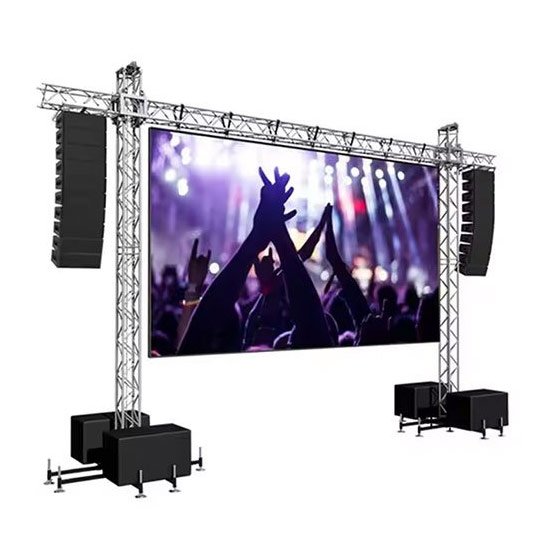
Vibrant colors and smooth frame rate for films, Can be wall mounted. Great for advertisement and entertainment.

Has great dual remote control management from manual and digital, Has brightness control with heat dissipation.
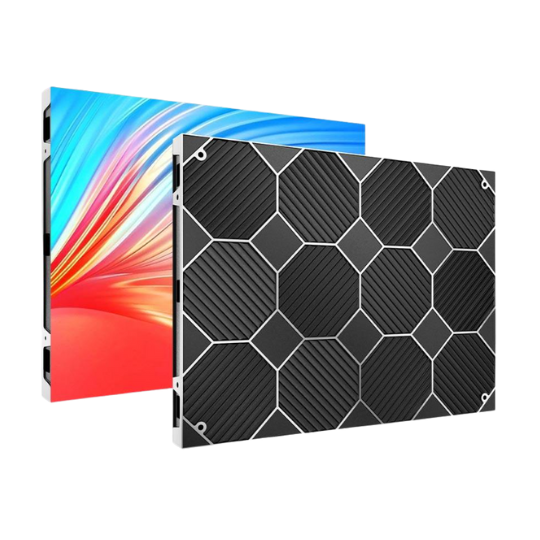
Application can be added for indoor, Has automatic system that enhances both heat dissipation and temperature control.

Advertisement and entertainment application, personalized die casting material for panel and module for sturdy stand.
LED Screen on Stage Factory Overview
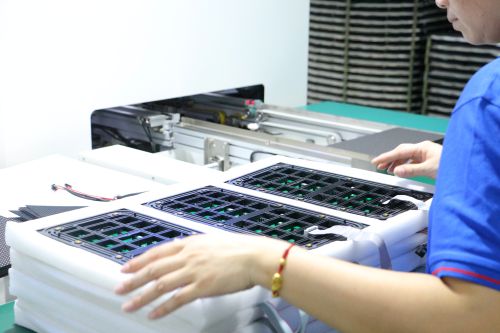
JingyLED stage LED screen factory continuously introduces cutting-edge manufacturing equipment and technology in the industry. The factory has more than 100 high-precision automation equipment, from PCB sampling, SMT dispensing to whole machine assembly and aging testing, achieving efficient and consistent production capacity control throughout the entire process. Our products have passed multiple international certifications such as CE and ETL, ensuring that they fully comply with global industry standards and have a service life of over 8 years.
JingyLED’s stage LED screen has a refresh rate of up to 3840Hz, supports 14 bit grayscale processing, and has no graininess or reflective impurities, achieving natural color reproduction and smooth images.

JingyLED Custom Service From the Excellent Stage LED Screen Supplier
JingyLED focuses on technology and provides high-quality and high-performance display solutions, which is our core business as a stage LED screen supplier.
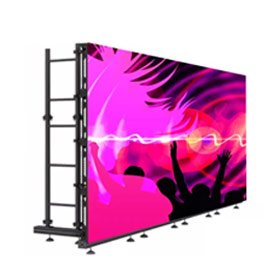
Various layouts such as large curved screens, 360 immersive circular LED screens, ground or suspended screens that can be customized to fit the venue, or LED can be integrated into the stage architecture, such as LED lightbox walls, to enhance the stage experience.

Select different pixel spacing based on viewing distance, such as P1.9, P2.5, P3.9, etc., to ensure clear image and budget compliance.
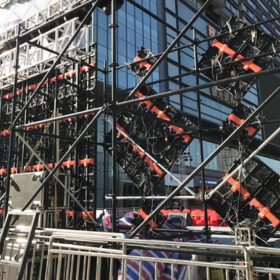
JingyLED supports 500x500mm and 500x1000mm cabinet options, lightweight modules for quick installation and removal, supporting both front and rear maintenance for flexible site conditions, which is suitable for touring, flashing, and multi scene replacement.

Provides IP54-IP65 protection level, adapts to rainy and dusty environments, the screen is dust and water resistant, supports outdoor use, and is equipped with high brightness chips to ensure a visible experience under sunlight.
- Our Factory
- Technical Specifications
- Model Data Sheet




| Item | Options / Details |
| Product Name | Stage Led Screen |
| Pixel Pitch | P2.5 / P2.97 / P3.91 / P4.81 |
| Refresh Rate | 1920Hz / 3840Hz / Customizable |
| Brightness | Indoor Stage: 800 – 1200 Nits / Outdoor Stage: 4500 – 5500 Nits |
| Viewing Angle (H/V) | 160° / 160° |
| Operating Temperature | -20℃ – 60℃ |
| Power Supply | AC 100V – 240V |
| Connection Type | DVI / Wi-Fi / 4G / HDMI / Others |
| Control Platform | Cloud-based on Android / iOS app |
| IP Rating | Indoor S: IP30 / Outdoor S: Front IP65, Rear IP54 |
| Lifespan | Up to 100000 hours |
| Certificate | CE / RoHS / FCC / ISO9001 |
| Model | P6.67 | P8.33 | P10 |
| Module Size(mm) | 400×300 | ||
| Module Resolution(dot) | 60×45 | 48×36 | 40×30 |
| Scanning(s) | 1/6 | 1/4 | 1/3 |
| Encapsulation | SMD2727 | SMD3535 | SMD3535 |
| Maintenance | Front/Rear | ||
| Installation | Front/Rear | ||
| Cabinet Size(mm) | 1600×900 | ||
| Density(dot/m) | 22500 | 14400 | 10000 |
| Brightness(cd/m) | 6500 | ||
| IP Rate | IP65 | ||
| Refresh Rate(Hz) | 3840-7680 | ||
| Cabinet Weight (kg) | ≈52 | ||
| Cabinet Material | Die-cast aluminum | ||
| Grayscale | 14-16Bit | ||
| Frame Change Frequency(Hz) | 50/60 | ||
| Viewing Angle(V/H) | V>170°/H>170° | ||
| Best Viewing Distance(m) | >6.67 | >8 | >10 |
| lnput Voltage(V) | AC110V±15%/AC220V±15% | ||
| Max./Avg.power consumption(w) | 630/250 | 550/200 | 550/200 |
| Storage Temperature&Humidity(RH) | -20℃~60℃/10%~90% | ||
| Life Span(h) | ≥100,000 | ||
Stage LED screens typically range from $500 to $1,500 per square meter, depending on type (indoor/outdoor), pixel pitch, and design. Contact JingyLED for a custom quote based on your event size and screen specs.
Stage LED screens come in various sizes, typically ranging from 3×2m to 10×6m or larger. Common sizes include:
- Small stage: 3×2m, 4×2.5m
- Medium stage: 5×3m, 6×4m
- Large stage: 8×5m, 10×6m+
Custom sizes are available from JingyLED to fit different stage layouts and venue requirements.
Stage LED screen refers to LED display devices installed behind or on the side of the stage, used for background images, video playback, or animation display. JingyLED’s LED stage screen has features such as high brightness, high refresh rate, and wide viewing angle, which can perfectly match events such as concerts, theaters, weddings, etc., enhancing visual impact and improving the atmosphere of the scene.
Installing a backdrop LED screen typically involves the following steps.
- On site evaluation and structural construction
Measure the installation position dimensions, build steel frames or support structures to ensure load-bearing and stability.
- Power wiring and equipment power supply
Configure a dedicated distribution box, lay cables, and ensure proper grounding and overvoltage protection.
- Screen installation and debugging
Splice or hang modular LED panels piece by piece onto brackets, and connect data and power cables. Configure the control system and set the screen to be harmonious.
- Testing and Content Import
Upload playback content, check dead spots, color difference, and screen synchronization, confirm the effect is qualified, and then execute the formal activation.
- Maintenance and Security Assurance
Ensure the bracket is securely fixed, the wires are neat and orderly, the joints are waterproof and dustproof, and clear maintenance paths are left.
The approximate installation time will depend on the size of the stage LED screen background. If you still have any questions about the installation process, you can contact JingyLED for more information.
How To Plan A Stage LED Screen Project Before Ordering?

Confirm The Stage Space And Screen Size
Before ordering, you need to measure the stage width, height, and the available installation space behind the screen. The screen size should not be decided only by the stage size. You also need to consider the audience viewing distance and sightlines. If the screen is mainly used for concerts and similar events, you can also match its size with the stage proportions.
Choose The Right Pixel Pitch
The closer the viewing distance, the smaller the pixel pitch you need for a clearer image. If the audience is close to the screen, you can choose fine-pitch LED screens like P2.6, P2.9, or P3.9. If the screen is mainly used for large stages, concerts, or long viewing distances, you can choose P3.9, P4.8, P5.9, or even larger pixel pitches.
Check Brightness And Refresh Rate
Stage LED panels need to have the right brightness for the stage lighting environment. Indoor stages usually need a maximum brightness of around 2,000 nits, while outdoor stages typically require around 5,000–10,000 nits.
If your screen will be used for photography or live streaming, you should also pay close attention to the refresh rate. We recommend choosing a refresh rate of at least 3,840 Hz or 7,680 Hz to reduce black lines, flickering, or scan lines on camera.
Select The Right Cabinet
LED stage screens are often installed, dismantled, and transported frequently, so you need to consider the cabinet weight, structural strength, assembly method, and maintenance method.
If the screen will be used for frequent touring, you can choose lightweight die-cast aluminum cabinets. You should also check whether the quick locks and power and signal connectors are suitable for frequent assembly and disassembly.
Plan The Power And Signal System
You also need to calculate the total power consumption of the stage LED display and confirm that the venue has enough power capacity. Besides, you should plan the power distribution boxes, power cables, signal cables, and backup lines in advance.
Meanwhile, you need to make sure that the LED screen’s control system, sending cards, receiving cards, and video processor are compatible. If you need to show several video sources and switch between different screens at any time, you should also confirm the video input and signal distribution setup in advance.
Choose the Right Maintenance Method
A front-service stage LED screen has a structure that supports quick module removal from the front. The technicians can remove the modules and access the internal components from the front of the screen for maintenance. The rear-service stage LED screen requires the technicians to access the screen from the back for maintenance and component replacement.
If your stage space is limited, there is not enough maintenance access behind the screen, or the screen is installed close to a wall, you can choose a front-service design.
Or, if your screen is installed on an independent steel structure, there is enough service space behind it, and you want better heat dissipation and lower maintenance costs, you can consider a rear-service design.
What Information Should You Provide When Buying Stage LED Panels?
Project Application And Event Type
First, you need to define the specific application for the LED stage screen, such as concerts, music festivals, theaters, conferences, weddings, corporate events, or tours. Generally, different events have different requirements for the screen.
If the screen needs to be frequently assembled, disassembled, and transported, you should inform the stage LED screen supplier in advance. If the screen will be permanently installed on a fixed stage, you should also let the supplier know.
Screen Layout And Cabinet Configuration
Besides providing the overall screen dimensions, you’d better provide a detailed screen layout. For example, specify the dimensions you need for the main screen, side screens, stage backdrop, floor LED screen, and irregular-shaped screens.
If your project includes several screens, you can provide a stage floor plan or a simple installation diagram and mark the location of each screen. Based on this information, the stage LED screen supplier can determine the number of cabinets, the assembly method, and how the different screens will be connected.
Content And Video Requirements
You need to tell the stage LED screen manufacturer what type of content you will mainly display, such as live camera feeds, close-ups of people, motion graphics, text, brand logos, or HD video.
In addition, if the project needs to connect to cameras or a live production system, you should specify the video signal types and input interface requirements in advance. For events that require live filming, remember to confirm in advance whether you need a display with low flicker.
Installation And Venue Conditions
You should also provide the manufacturer with information about the installation location, including whether the screen will be installed indoors or outdoors, whether there is maintenance space behind the screen, the installation height, and whether there are any special stage structures.
If you plan to suspend the display screen, you should also provide the suspension point locations and available load capacity. If your screen will be ground-stacked, you need to specify the ground conditions and stacking height. For temporary events, it is also helpful to provide site photos or drawings of the installation area.
Power Supply And Control System
Tell the supplier about the available power supply at the site, including the voltage, frequency, and whether it is single-phase or three-phase power.
You should also tell the supplier whether you already have control equipment like NovaStar or Colorlight, or whether you need the supplier to provide the sending cards, receiving cards, and video processor. If your project needs redundant power supplies, backup signal paths, or remote control, you should also mention these requirements before placing the order.
Transportation And Service Requirements
If your stage LED screen will be used for frequent touring, you should specify the transportation method, travel distance, and assembly and disassembly frequency in advance. Based on this information, the supplier can choose the appropriate flight cases, cabinet structure, and spare parts plan.
In addition, you can confirm the spare parts quantity, on-site installation guidance, remote technical support, and after-sales service arrangements in advance. In particular, if your project is overseas, you should confirm the packaging dimensions and the export document requirements to calculate the logistics costs in advance.
| Information | What To Provide |
| Application | Concert, touring, theater, conference, etc. |
| Screen Size | Width × height |
| Viewing Distance | Minimum / average distance |
| Pixel Pitch | Preferred pitch or recommendation needed |
| Installation environment | Indoor / outdoor |
| Installation | Ground stack / hanging / fixed |
| Screen Shape | Flat / curved / L-shaped / irregular |
| Refresh Rate | Standard / camera / live broadcast |
| Brightness | Indoor / outdoor |
| Cabinet Size | Standard or customized |
| Maintenance | Front / rear |
| Power | Voltage / frequency / phase |
| Control System | NovaStar / Colorlight / other |
| Quantity | Main screen / side screen / floor screen |
| Destination | Country / city |
How To Customize A Stage LED Screen For Different Stage Shapes?

You can choose a flat, curved, L-shaped, cylindrical, or other custom-shaped design based on the stage size, structure, and desired visual effect. However, you need to consider several factors before customization.
Flat Stage LED Screen
If the stage backdrop is a standard rectangle, the flat stage LED screen is usually the most straightforward choice. Besides, flat stage LED displays are usually easy to install and maintain. They also make it easier to replace modules, expand the screen area, or adjust the stage layout later.
If your project involves frequent touring, it is recommended to choose standardized cabinets to make transportation and reinstallation easier.
Curved Stage LED Screen
If you want the screen to form a curved backdrop, you can use curved LED cabinets that support a certain range of connection angles.
When customizing, you first need to provide the curve radius, arc angle, and screen dimensions. Based on this information, the supplier can determine the number of cabinets and the assembly method. You should note that a curved structure should not be designed only for visual effect. You also need to leave enough space for maintenance.
L-Shaped Stage LED Screen
An L-shaped stage LED screen usually consists of two perpendicular screen surfaces. It can be used for stage backdrops, side walls, or corner areas. If the project needs to display content in two directions at the same time, you can choose this type of LED screen.
You need to confirm the corner position and the dimensions of both screen surfaces in advance. If necessary, choose cabinets designed for quick assembly.
Planned Maintenance For Custom Shapes
Remember to plan the maintenance method for the irregular LED stage screen in advance. You need to confirm whether to use front or rear maintenance and leave enough space for maintenance in the structure. If some cabinets are fixed inside the stage structure, make sure the LED modules, power supplies, and receiving cards can still be removed separately.
As for complex irregular stages, we also recommend giving the supplier the stage CAD drawings, 3D renderings, screen dimensions, and installation location before placing an order.
Stage LED Screen Price Breakdown and How To Reduce It?
LED Modules And Pixel Pitch
In most cases, LED modules account for 30-40% of the total cost. If you are customizing a rental or touring stage LED display screen, the modules may account for a larger share of the total cost. Meanwhile, as pixel density increases, the cost of the LED modules also increases.
LED Cabinet And Mechanical Structure
We recommend that the cabinet materials and structure account for around 15-25% of the total concert LED display cost. If you plan to use the screen for touring, we recommend choosing lightweight die-cast aluminum cabinets. They usually cost more than standard steel cabinets, but they are better suited for frequent setup and teardown.
Control System And Video Processing
We recommend keeping the cost of the control system and video processing at around 6-12% of the total cost. The control system configuration depends on the screen size, signal sources, and how the screen will be used on site. Avoid choosing a system without considering your actual needs.
If you do not need multiple signal switching or other special effects, you can avoid choosing a processor with more processing capacity than you need.
Power, Steel Structure And Accessories
In addition to the LED screen itself, you also need to calculate the costs of power supplies, the power distribution system, steel structure, signal cables, power cables, and installation accessories. These costs usually account for around 10% of the total cost.
Transportation, Installation And Maintenance
The event LED displays usually need to be transported to the event venue, so you should also include transportation, packaging, flight cases, labor for installation, and on-site commissioning in your budget. If the screen is used for touring, you can choose higher-quality flight cases and allocate a larger budget for repeated transportation.
How To Reduce The Total Cost of A Stage LED Display?
To reduce the price of a stage video wall, start by cutting unnecessary specifications and supporting costs:
- Choose the Pixel Pitch based on the actual viewing distance, rather than automatically choosing a smaller pixel pitch.
- Choose the right brightness for the environment light level.
- If the screen does not need to be used for frequent touring, you can choose a cabinet structure designed for fixed installations.
- Choose the video processor and control system based on your actual signal requirements.
- Confirm the screen size and cabinet quantity in advance to reduce customization costs caused by non-standard sizes.
- Compare complete project quotations, including equipment, steel structure, transportation, installation, and commissioning, instead of comparing only the price per square meter.
How To Test A Touring LED Screen Before A Live Event?

Check The Physical Installation
Before powering on the screen, check whether the LED cabinets are securely installed and whether the fast locks, connectors, and power cables are properly connected. Then, check the screen surface for loose modules, deformed cabinets, or visible gaps.
Test Every LED Module
After powering on the screen, check each LED module, and make sure it displays properly. You can play solid red, green, blue, white, and black test screens to check for color differences, dead pixels, and other display issues.
Check Brightness And Color Uniformity
After confirming that the display is working properly, you can carefully check whether the brightness and color are consistent. If you notice that any area is brighter, darker, or has a different color, calibrate it.
Test Video And Signal Transmission
Next, test whether the signal connection is stable. You can play the actual video content that will be used during the event and test different resolutions, aspect ratios, and input signals. If the screen needs to connect to cameras, a video switcher, or other video equipment, you should also carry out a complete signal test using the actual equipment.
Test Power And Backup Systems
Finally, you need to test the power supply and backup systems for the entire screen. If your project includes backup power, a backup signal path, or backup control equipment, you should also test the switchover before the event.
How To Maintain A Stage LED Display During Frequent Use?
Inspect The Screen Before And After Each Event
Before each event, you need to check whether the power and signal connectors are working properly. After each event, you should also inspect the screen again, especially the areas that are frequently assembled and disassembled.
If you find loose modules, damaged connectors, or deformed cabinets, make sure to address these issues before the next use.
Clean Dust And Dirt Regularly
Frequently used stage LED walls can easily accumulate dust. You can use a soft anti-static brush, low-pressure air, or a slightly damp microfiber cloth to clean its surface. Avoid using alcohol or other solvents when cleaning.
Check Connectors And Cables
Regularly check the connectors for looseness, oxidation, or signs of burning. If you find any damage to the outer insulation of the power or signal cables, replace them promptly. If your stage LED screen is for touring, we recommend labeling the cables and cabinets to avoid connection errors caused by mixing up different equipment.
Monitor Heat And Ventilation
Stage LED video walls generate heat during long periods of operation, so you’d better make sure the back of the cabinets has good airflow. If you notice any abnormal fan speed, repair or replace the fan promptly.
How Many Spare Parts Should You Keep For A Stage LED Screen?
When purchasing an event LED screen (or rental stage LED screen), make sure to consider the spare parts you need and how many you should keep. You can determine this based on the screen area and the number of cabinets. Below are our recommended spare parts and quantities:
LED modules: 2%–3% of the total number of modules
Power supplies: 3%–5% of the total number of power supplies
Receiving cards: At least 2–3 units
Power cables and signal cables: 5%–10% of the total quantity
Small structural parts, such as fast locks, screws, connectors, and rigging accessories: prepare them according to the specific model.
The final quantity of spare parts should be adjusted based on actual usage. If you plan to install the screen permanently, you can keep fewer spare parts. If your project requires frequent setup and dismantling, we recommend keeping more spare LED modules, power supplies, and cables.
In addition, you should consider the supplier’s lead time. If an LED module or power supply takes a long time to restock, you may want to keep more spare units, even if its failure rate is normally low.
What Certifications Should You Check When Buying Stage LED Screens?

CE and FCC for The European and US Market
If you need to import a touring LED screen into the EU market, you should usually pay attention to CE compliance requirements. For the U.S. market, you should mainly check the relevant FCC requirements. When purchasing, you can ask the supplier to provide test reports for the product or its relevant electronic components.
RoHS For Restricted Substances
RoHS mainly restricts the use of certain hazardous substances in electrical and electronic equipment. If you are exporting an LED stage display to a market where RoHS requirements apply, you can ask the supplier to provide a RoHS Declaration or relevant test reports.
EMC And Electrical Safety Test Reports
You can also check EMC and electrical safety tests. For a large stage LED screen covering hundreds of square meters, you can ask the supplier to specify the exact product model and test standards covered by the tests, rather than simply checking a certification logo.
IP Rating For Outdoor Stage LED Screens
If the screen will be used for outdoor events, it is essential to confirm its IP rating. For example, IP65 means the equipment is dust-protected and can withstand low-pressure water jets. IP66 provides a higher level of protection against powerful water jets. We also recommend checking whether the product structure tested in the report matches the actual product structure.
Check The Authenticity And Scope Of Certificates
Finally, you should check the certificate itself, especially the stage LED screen manufacturer’s name, product model, test standards, issuing body, validity, and scope of application. If the supplier provides a test report, you can also check whether it was issued by a qualified laboratory.