
When you purchase LED screens, you may encounter many different types and be unsure about how to choose. If you choose the wrong type, the return you get may be affected. This article will introduce the types of LED displays in detail, and help you make a better choice.
Classification By Packaging Method
The packaging method refers to how the LED chip is fixed on the PCB board. It affects your screen’s pixel pitch range, resolution, brightness, and durability; this is an important point that you can not ignore when making the selection.
COB P1.5 VS SMD P1.5 LED Display Module
DIP LED Displays

DIP refers to Dual In-line Package. In current applications, it has gradually been phased out. It means inserting the LED chip pins into holes on the PCB and then soldering them. It is often used in highway billboards and other large advertising screens. If you want to customize a large outdoor screen, it may be a suitable solution.
Advantages of DIP LED displays:
- Can achieve very high brightness
- High reliability
- Cost-friendly
Disadvantages of DIP LED displays
- Poor clarity
- Limited visual representation
SMD LED Displays

SMD means Surface Mounted Device. Under this packaging type, each LED chip will be packaged separately and then mounted on the PCB board. Currently, SMD is the most commonly used technology in LED displays, and it is widely used for both indoor and outdoor applications.
It offers a good balance between image quality and cost. If your budget is limited, SMD will be a good option. The main advantages of SMD LED displays are:
- Cost-effective
- High Resolution
- Mature production technology
The main disadvantages of SMD LED displays are:
- Exposed LEDs
- Limited protection capability
COB LED Displays

COB is short for Chip on Board. In this packaging method, the LED chips will be directly packaged on the PCB and then encapsulated together. It can achieve a smaller pixel pitch and more uniform color.
COB technology is often used in places that require clear display and 7×24 operation, such as control centers. If you want a stable display effect, COB is a good choice.
The main advantages of COB LED displays:
- Superior reliability
- Bring you immersive viewing experience
- Good thermal performance
- Low failure rate
The main disadvantages of COB LED displays
- High purchase cost
- High maintenance cost
GOB LED Displays

GOB (Glue on Board) refers to adding a transparent optical glue layer on the surface of SMD or COB modules. It has better impact resistance and scratch resistance. GOB LED screens always have more advantages in places with heavy foot traffic, such as shopping malls and transportation hubs. If you want to place the screen in these areas, you’d better choose them.
The main advantages of GOB LED displays:
- Higher frontal protection capability
- Lower failure rate
The main disadvantages of GOB LED displays
- High purchase cost
- Difficult to maintain
| Packaging Type | Color Performance | Heat Dissipation | Application | Cost |
| DIP | Average | Good | Outdoor screens, door head scrolling screens | Low |
| SMD | Excellent | Good | Indoor conference screens, outdoor high-definition screens | Medium |
| COB | Optimal | Outstanding | Fine-pitch high-end screens | High |
| GOB | Good | Good | Commercial HD screens | Medium-High |
Classification By Pixel Pitch
Fine Pixel Pitch LED Displays

The pixel pitch of this type of display is about 0.6 mm to 2.5 mm, or even smaller. It can provide you with extreme details and an immersive viewing experience. It is suitable for indoor screens with short viewing distances, like conference room screens. The fine pitch LED display is suitable when the viewing distance is short, and you need to show good clarity.
Standard Pixel Pitch LED Displays

The pixel pitch of this type of LED display is usually between 2.5 mm and 6 mm. Its display effect is not as clear as small pixel pitch displays, but its cost is always lower. It is often used for large screens with long viewing distances, like advertising screens. If your expected viewing distance is 3 to 10 meters, you can choose this range.
Large Pixel Pitch LED Displays

Large pixel pitch displays are commonly used for large outdoor screens. Their pixel pitch is usually more than 6 mm. Due to the lower pixel density, they have better heat dissipation performance and are fit for high brightness. Its unit cost is usually lower, and it is suitable for large outdoor high-brightness screens.
Classification By Structure
Flat Rectangular LED Display
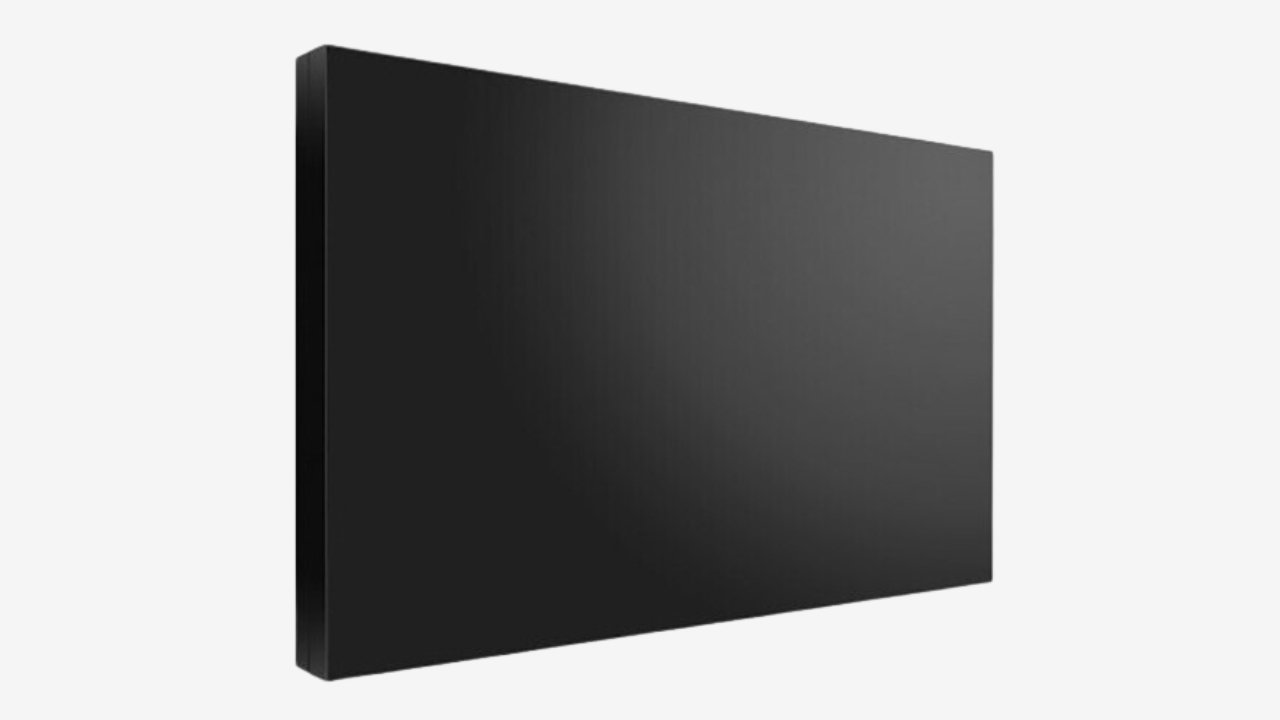
Flat screens are the most common and most stable type among all LED screen structures. It is a standard flat structure. If you are unsure about which structure to choose, flat screens are definitely suitable for all types of spaces and content.
Irregular LED Display

Except for the standard rectangle, flat screens can also be made into many shapes, such as circles, triangles, wave shapes, etc. This type of screen is mostly used in stages, creative spaces, or flagship stores. You can customize their shape and size to meet your display needs.
Curve LED Display

A curved screen is usually made of flexible modules. They are mostly installed on curved facades, and can better integrate with your space. When it is curved inward, it can wrap your field of view better and provide you with an immersive display effect; When it is curved outward, it can cover a wider viewing angle and increase the content’s exposure.
Column LED Display

They are usually attached to a cylinder and can display content in 360°. Their diameter can range from 40 cm to over 5 m. Column LED screens can effectively use your space and greatly increase the exposure rate of the content.
Cube LED Display
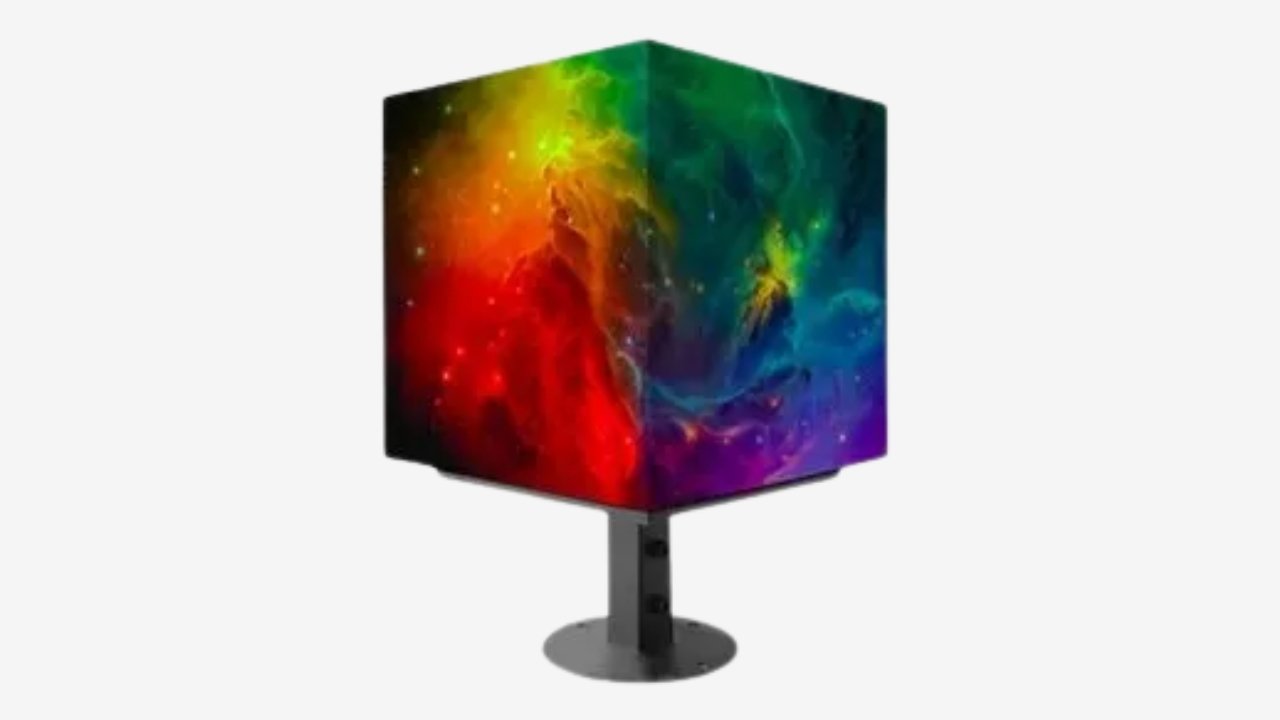
Cube LED displays are usually cube-shaped, and they can also be designed with more sides. It can deliver content from multiple directions. If you need a display screen to show the logo or for other areas with high foot traffic, you can use a cube screen.
Spherical LED Display

A spherical screen can also display content in all directions. It can be made into a spherical or oval shape. For applications that need artistic expression, it might be a good choice. It is worth noting that if you choose a spherical screen, you need to do spherical mapping for the video.
Classification By Color
Full-Color LED Displays
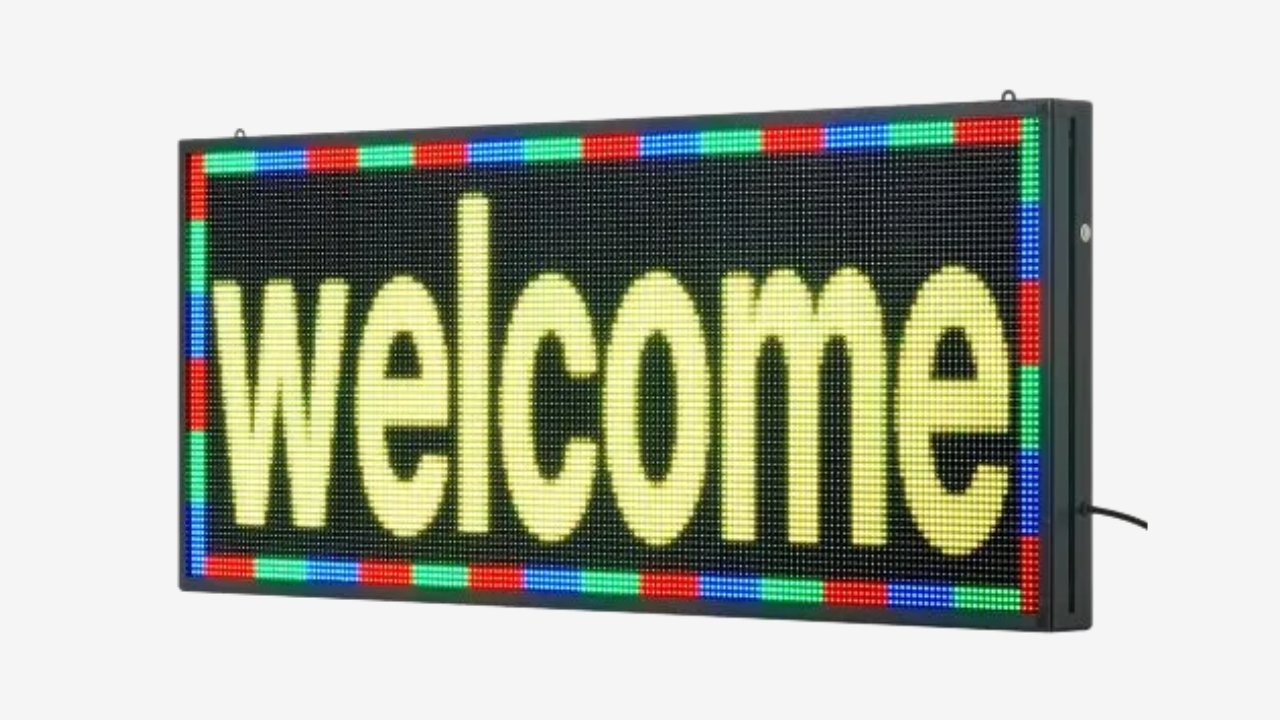
By mixing different ratios of red, green, and blue colors, LED chips can show almost all colors. Of course, full-color screens also have different levels of color performance, and they are affected by color gamut, grayscale, contrast, and color temperature.
Monochrome LED Displays

Monochrome LED displays come in handy when you are looking to convey simple messages. They only support and produce one color, and allow you to save a fortune since they are comparatively easier to maintain.
Dual-Color LED Displays
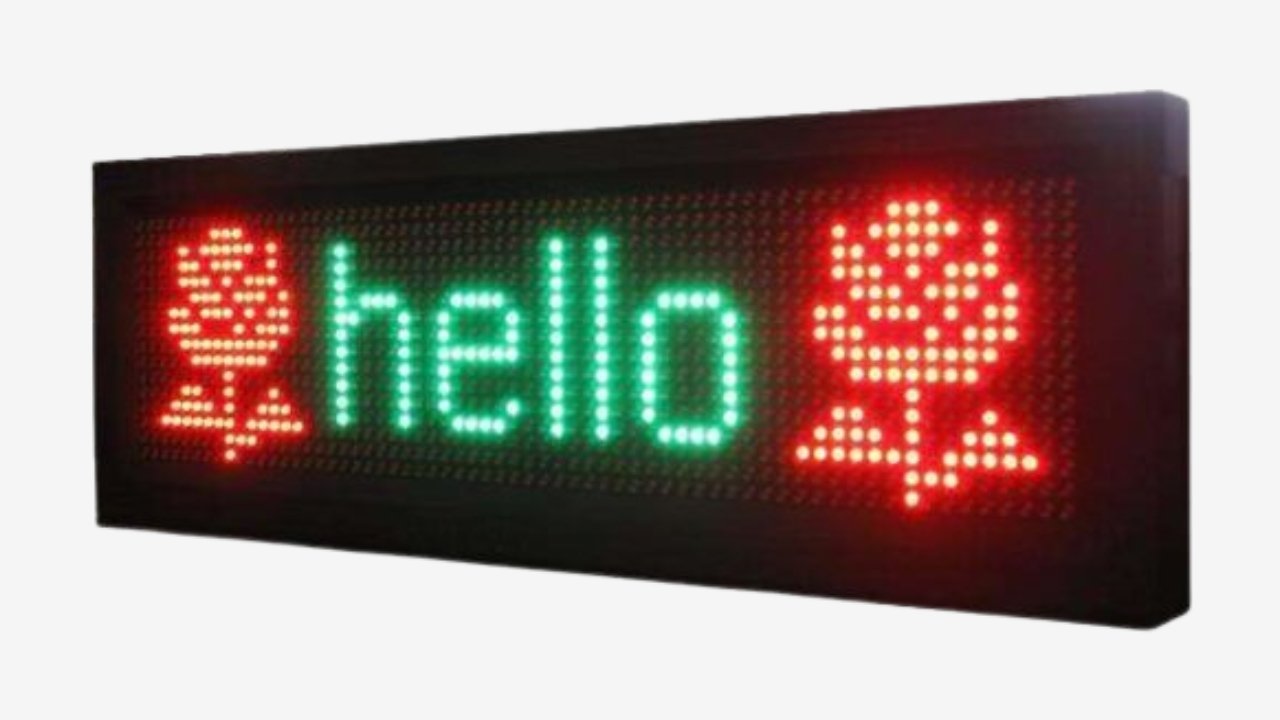
This type of screen is made of two colors of LEDs, and they can also combine to produce limited colors. If you only need to show text information, such as a scoreboard, you can use a dual-color screen.
Classification By Application
Indoor LED Displays

Because the indoor LED screens will not be exposed to rain, direct sunlight, or extreme temperatures directly, they usually have lower brightness, lower protection levels, and weaker heat dissipation. Instead, most of them will give you a more comfortable viewing experience. Typical indoor LED screens include:
- Church LED display
- Conference LED screen
- Cinema LED screen
Outdoor LED Displays

Outdoor environments are complex, and this type of display usually has a good protection level. And because of strong sunlight, they also have higher brightness, which is usually more than 5,000 nits. The structure of outdoor LED screens is also stronger, and can operate normally even under strong winds. The common types of outdoor LED displays are:
- Outdoor advertising screen
- Stadium LED screen
- Mobile LED screen
- Stage LED screen
Classification By Installation Method
Freestanding LED Displays

This type of screen usually has a support structure at the back and can stand on the ground independently without relying on the wall. Besides, it is also very flexible. When its weight is light enough, you can move it to any position.
Wall-Mounted LED Displays

These LED displays are simply meant to be mounted on walls or immovable installation poles. They are sleek, and this installation mode allows you to give your venue or setting a modern aesthetic. Additionally, if you are short on space, mounting your LED screen on a wall leaves you with additional space.
Hanging LED Displays

These screens are usually hung on the ceiling. It does not take up additional space, and can fully use your upper space. More than this, the hanging screen can cover a wider area of the audience’s view. But you should know that their installation is difficult and risky, and most of them need a professional design.
FAQs
Which Type of LED Display is Best for Outdoor Commercial Advertising?
When the screen is used for outdoor advertising, the viewing distance is usually far. And no matter how far this distance is, it must have enough brightness and clarity. So, in this case, you need to choose large pixel pitch and high brightness screens.
Moreover, because it often runs continuously, the screen must have good heat dissipation. Its protection level also needs to reach IP65.
How to Choose the Right LED Display Type for My Project?
We suggest you follow these steps to make the decisions:
First, confirm the usage environment and your expected content. Based on this, decide the screen size, brightness, protection level, and other details.
Next, choose the appropriate pixel pitch based on the viewing distance.
Then, confirm the installation method of the screen, which determines its structure.
In addition, you need to confirm your budget range. When necessary, you should adjust the parameters based on the actual situation.
Which LED Display Type Offers the Best Durability and Protection?
Among different packaging types, the GOB LED display based on COB has the highest durability. This type of screen has a low failure rate. Even under long-term operation, it still does not fail. It is also more resistant to impact than other screens.
However, in terms of waterproof and dustproof, there is not much difference among different packaging methods. The high protection level is mainly achieved by the sealing structure of the module and cabinet.
What are the Future Trends in LED Display Types and Technologies?
Technology is advancing, and the cost of high-end technology will become lower and lower. In terms of packaging methods, COB packaging will gradually become more popular, and DIP and SMD will be further replaced. Besides, HDR effects and high refresh rates (such as 3840Hz and 7680Hz) will also be more widely used.
More than this, the control systems will keep advancing in the future. When purchasing, you can pay more attention to the screen’s scalability.
Final Thoughts
When purchasing LED screens, you have a wide range of options. But this does not mean that decision-making will be difficult. You only need to choose each detail based on your actual needs. If you have any further questions, feel free to consult JINGLED for a tailored solution.

