
If you are considering upgrading the project experience and increasing user engagement, an interactive LED screen is definitely a key part. It can enhance users’ sense of participation and improve your brand image. This article will introduce everything about interactive LED screens, and provide reliable purchasing advice.
What is an Interactive LED Screen?
Essentially, an interactive LED screen is a multi-sensory display system, which is a normal LED screen that adds interactive features. It can display videos, images, and animations. Moreover, it can detect your actions, and provide real-time feedback based on them. It offers you a fresher and more engaging experience. Also, the interactive LED screens can adapt to various industries and scenarios.
The Work Principle of the Interactive LED Screens
An interactive LED screen is not just a single screen; it is a complete system. Its core modules include four parts: the display module, the sensor module, the control module, and the software system.
When you touch the screen or your actions are captured by the camera, the control module receives and analyzes them. Then, the control module will control each pixel through the LED driver chip, and refresh the display in real time based on your interaction. Finally, your interaction data will be recorded and analyzed, to guide future interaction improvements.
Why Choose Interactive LED Screens?
Increase User Engagement
The traditional LED screens only provide one-way information display, while interactive LED screens offer two-way feedback. You can make the screen respond to your operation by touching it with your finger, or by waving your hand or moving around. This can greatly increase the audience dwell time, and raise your brand’s commercial value.
Enhance Immersive Experience
The interactive LED screen can integrate your vision, touch sensation, and movements. In particular, the large-scale immersive walls and LED floor tiles have a stronger visual enveloping effect, which enhances your sense of participation.
Support Marketing Conversion
Every interaction a user has with an interactive LED screen, including touch, motion sensing, scanning, or voting, will become a brand exposure. Moreover, a good experience will encourage users to take photos, record videos, and share them on social platforms. This lets your brand content be disseminated again, and enhances its influence.
Enhance Brand Image
The LED interactive screen can make the space full of a sense of technology and futurism. The use of advanced technology naturally conveys the high-end image of your brand to the public. Therefore, by using interactive LED screens, you can highlight your competitive advantages and enhance your brand image.
Easily Expandable in the Future
There is no doubt that technology is constantly advancing. After purchasing the interactive LED screen, you can continuously enhance its interactive capabilities. For instance, AI visual recognition, multi-person interaction algorithms, and XR virtual scenes. This helps your brand stay technologically ahead and greatly increase long-term returns.
Types of Interactive LED Screens

Touch Interactive LED Screen
The LED touch screens work through infrared touch or capacitive touch technology. You need to touch the screen with your fingers, and the touch sensor will detect the coordinates and respond. It is easy to operate, highly accurate, and responds quickly.
Gesture Interactive LED Screen
The advantage of a gesture interactive LED screen is that you can control the screen without touching it, using gestures, hand waves, body movements, or walking. It captures your gestures or movements through infrared sensors, depth cameras, or AI visual recognition. Gesture interactive LED screens provide a novel experience, and some of them also support multiple users interacting at the same time.
Wall-Mounted Interactive LED Screen
The wall-mounted interactive LED screens are usually installed on the walls. They support touch or motion interaction. They are usually large, which covers an entire wall, and deliver a strong visual impact. It can be used in science centers, museums, corporate showrooms, and other settings, which provide you with a completely new experience.
Interactive Floor
Interactive floors are installed on the ground. When you step or walk on them, they trigger screen animations or effects. This stepping effect can be patterns or water ripples, and it can also be turned into a game. It offers great fun and supports multi-user interaction, which attracts families and young people.
Transparent Interactive LED Screen
Transparent interactive LED screens support touch or motion interaction while allowing you to see objects behind them. It can be used effectively in window displays. It integrates transparent LED modules, which gives it a very modern look.
Considerations When Purchasing an Interactive LED Screen
Use Scenarios
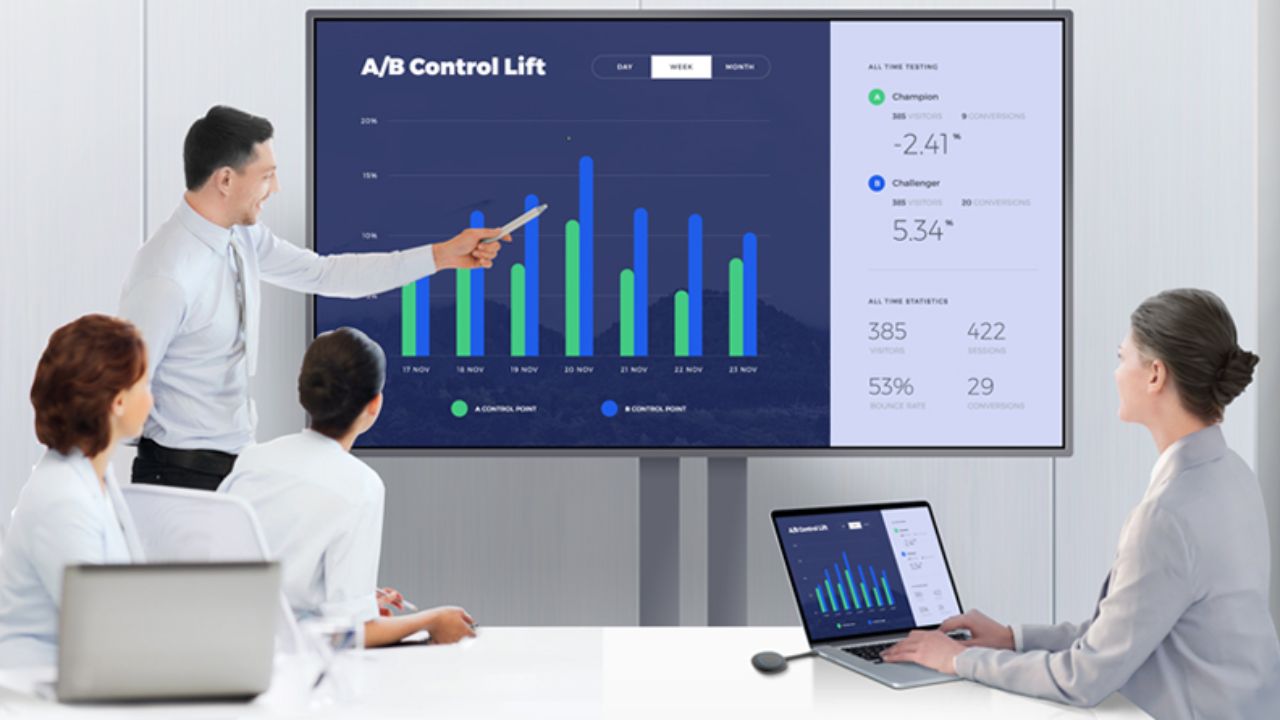
For different scenarios, the requirements for the screen structure, interaction methods, brightness, and the protection level of LED screens are completely different. For example, in commercial retail scenarios, the screen should have high brightness, and it should also be capable of supporting some interactive games.
Interaction Type
Touch interaction, motion sensing interaction, mobile phone interaction, and ground pressure interaction are all the current mainstream screen interaction methods. Each control method has its own features and suitable applications. Naturally, their installation costs and difficulties are also different. You need to choose based on your project requirements.
Confirm Your Budget Range
In most cases, an interactive LED screen is a system project, not a single product with a fixed price. Different interaction methods, sizes, pixel pitches, and control systems have different prices. You need to confirm your budget range first, understand the cost of each part of the interactive LED screen, and then make the final decision.
Future Trends of Interactive LED
AI Integration
AI technology is becoming more mature, and its application in interactive screens will also be expanding. It can be applied to many areas of interactive LED screens, including AI face recognition, behavior recognition, emotion analysis, visitor counting, and heatmap analysis. In the next 3–5 years, AI interaction will become standard in high-end showrooms and projects.
Contactless Interaction
Due to the enhanced hygiene awareness of users, the application of touch screens in public spaces is likely to decrease, especially in malls, airports, and similar places. Gesture recognition and motion interaction will replace it.
AR / VR / MR Integration
AR, VR, and MR technologies allow users to see more three-dimensional and realistic content. When combined with interaction technology, they create highly immersive experiences. This can greatly improve your brand reputation and high-tech image.
IoT Integration
IoT integration means connecting LED screens with lights, cameras, and other devices through the sensors, controllers, and cloud platforms, and achieving smart control. This way, multi-device interconnection can be achieved. When you interact with the LED screen, the surrounding lights and sound effects will also change accordingly.
Costs Will be Gradually Decreasing
Technologies about interactive LED screens, such as touch, motion sensing, AI vision recognition, and mobile interaction, are becoming more mature. This will lower both material and processing costs. Moreover, the cost of interactive LED screens may decrease year by year.
FAQs

What Is the Difference Between an Interactive LED Screen and a Standard LED Display?
Normal LED displays are mainly used for presenting content. Users merely watch but cannot interact with the screen. Interactive LED screens can display content and also support user interaction, triggering corresponding animations and games. It can make users feel more involved and also attract customers to stay.
Are Interactive LED Floor Screens Safe? What Is the Load-Bearing Capacity?
In the design and manufacture of interactive LED floor screens, safety is our top priority. During production, we use a series of measures to improve safety: anti-slip surface design, shatter-proof treatment, electrical safety, etc. According to different requirements, we can specially customize reinforced screens, which have a load-bearing capacity of over 1000 kg/㎡.
Does Latency Affect the Performance of an Interactive LED Screen?
Obvious delays will affect the effectiveness of the interaction. The delay of a typical high-performance interactive screen is usually less than 30 ms. It responds instantly, and you can hardly feel any lag. When the value is bigger than this, you will notice that the screen response becomes noticeably delayed.
Can an Interactive LED Wall Support Multi-User Interaction?
Interactive LED walls can support multiple users at the same time. However, the screen design and interactive system must support multi-touch or multi-user motion recognition. In general, small touch screens support 2 to 10 touch points. Large interactive walls can support 20 to 50 or more touch points, or multi-user gesture interaction. The LED walls allow more users to participate at the same time.
What is the General Lifespan of the Interactive LED Screens?
LEDs usually have a long lifespan. It is usually measured by the level of brightness decay. Based on 50% brightness decay, the lifespan of a normal high-quality LED module is about 100,000 hours. That is to say, when you use it for 8 hours per day, the overall lifespan of the interactive LED screen is generally around 8 to 10 years.
Final Thoughts

JINGYLED is a professional manufacturer that can offer you interactive LED screens with multiple interaction modes and multiple touch points. Besides this, we offer various sizes, resolutions, and installation methods. You can customize almost every detail of the LED display.
JINGYLED has a professional quality control team and promises accuracy at every stage of production. We also provide up to five years of after-sales service, so you can use our products with confidence.

